
Before Adam: Investigating the Ancient Traces of a Possible Pre-Human Vampire Lineage
A long-form historical investigation into early texts, origin myths and unexplained cultural memories that hint at a predatory race predating humanity.

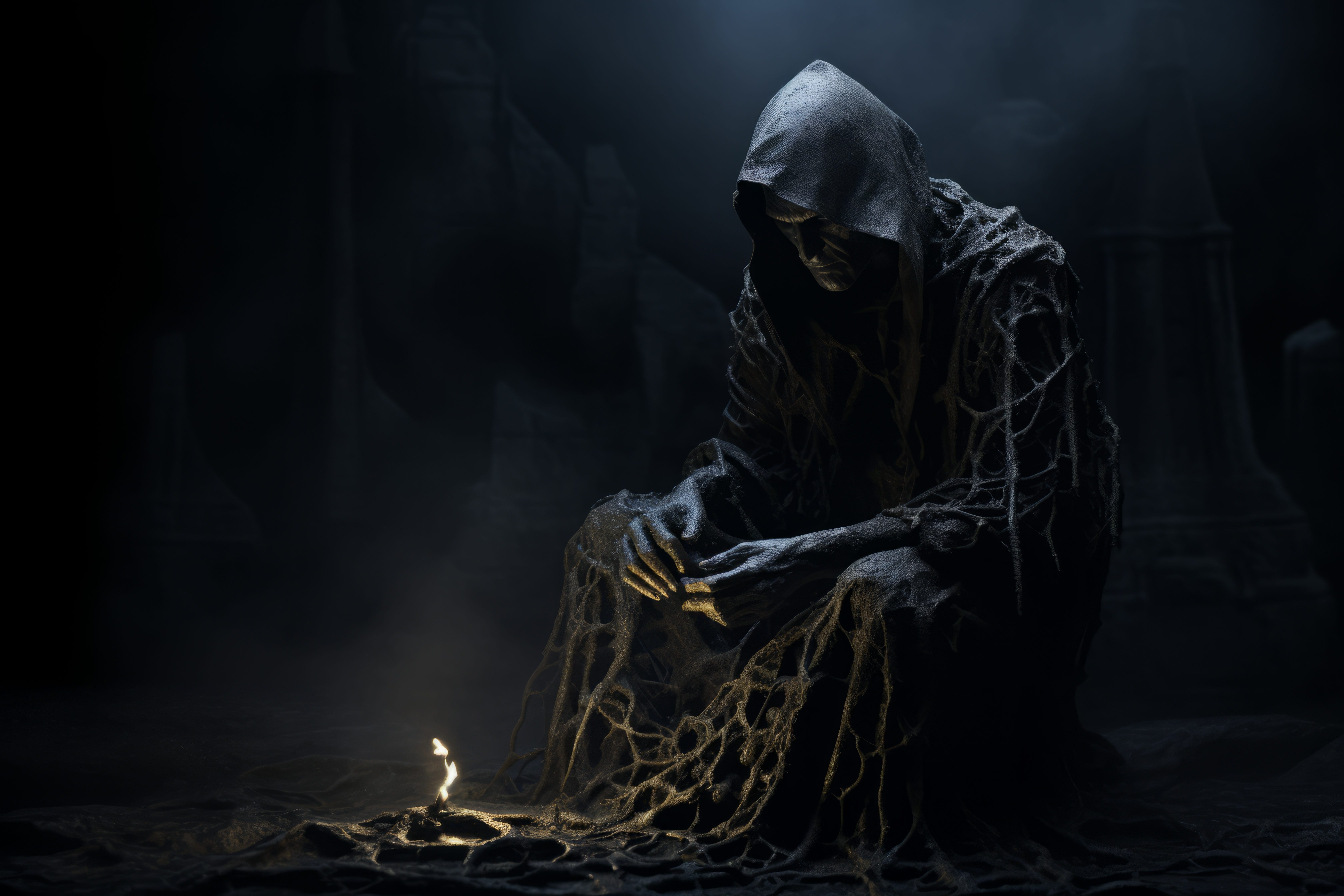
If you step far enough back into the oldest layers of our recorded memory, you begin to notice something unsettling. Across cultures, languages, and belief systems, stories emerge of beings that do not fit neatly into any evolutionary timeline or theological lineage. They appear as predators of the night, creatures with an appetite for blood or life-essence, and entities described as neither demons nor humans in the conventional sense. These accounts do not originate in modern horror fiction, nor in the romanticized vampire literature of the nineteenth century. They come from the earliest documented civilizations, from the oldest mythologies humans preserved, and from texts so ancient that the boundary between history and legend becomes difficult to mark.
What raises the stakes is that many of these stories do not simply describe “monsters”. They describe races, communities, or beings that are said to have lived on Earth before us. They are mentioned as remnants of a world that existed before Adam, before the recognized biblical lineage, and even before what archaeologists consider the rise of organized human society. For generations, these accounts have been dismissed as metaphor, symbolism, or misunderstood cosmology. Yet an investigative reading of the old sources shows that the descriptions are often surprisingly specific. They speak of bodies, habits, diets, migrations, conflicts, and even punishments inflicted upon these beings. If all of this were invented, it was invented with a level of consistency that slowly forces the question: Are we remembering something rather than imagining it?
One of the earliest sources that hints at a pre-human order is the Book of Enoch, a text excluded from the mainstream biblical canon but deeply respected in several ancient Jewish communities. Scholars have long debated how much of it is literal history or theological moral teaching. But regardless of interpretation, Enoch contains strikingly clear depictions of beings who lived outside the boundaries of early humanity. The text describes a group known as the Watchers, beings who descended, interacted with humans, and produced offspring. These offspring are portrayed not only as physically imposing but as aberrant in their behavior, consuming flesh and blood in ways that disturbed even the people of that era. It is easy to overlook the significance here. We are dealing with a document written in a pre-scientific world where metaphor was abundant, but Enoch is specific in its language. The offenders did not “symbolically” drink blood. They drank actual blood. They consumed flesh in a way that left a cultural scar, one strong enough to survive the filtering processes of oral tradition and manuscript preservation.
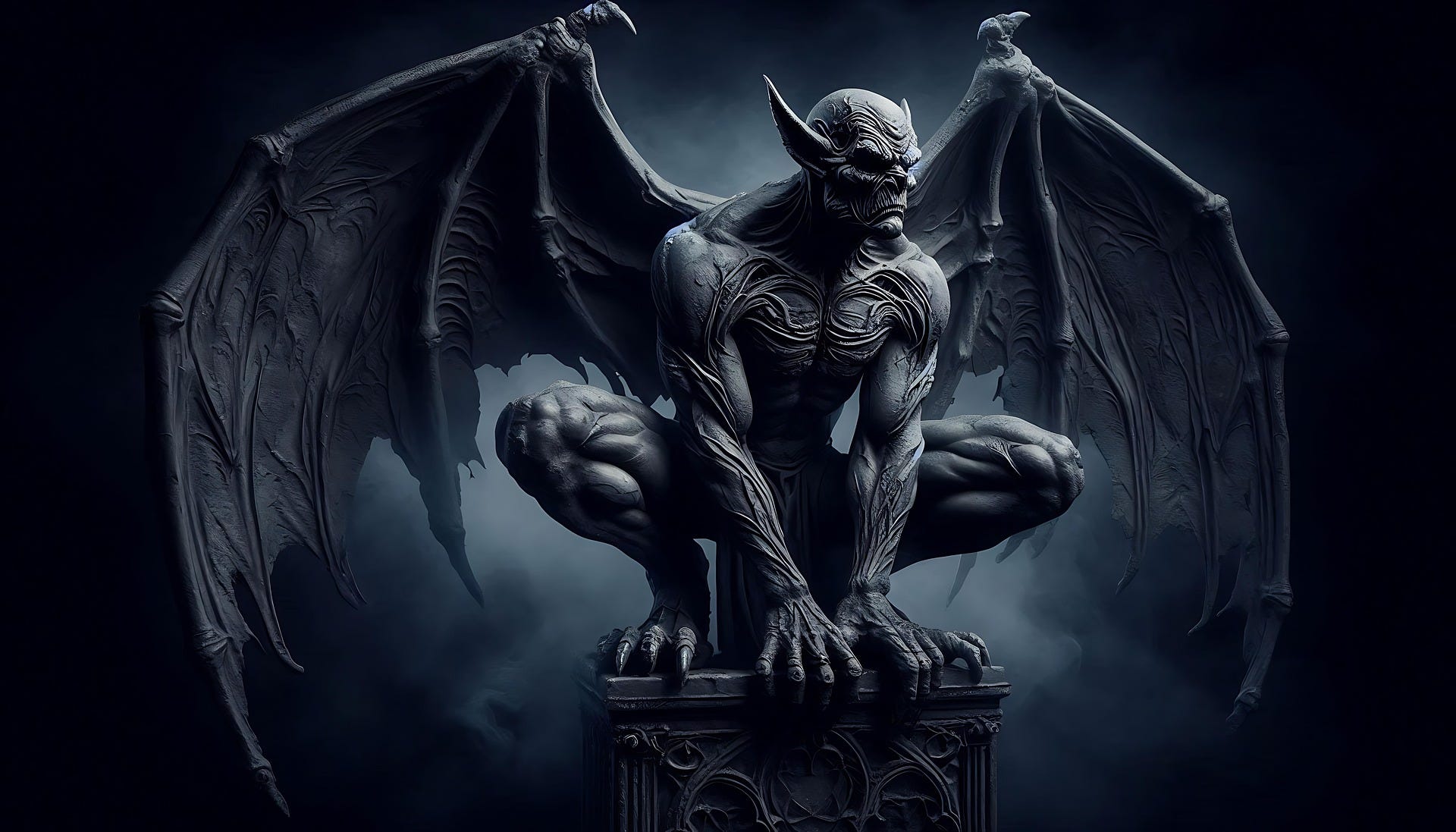
The question, then, is not whether such stories existed. The question is why so many early societies felt the need to describe similar beings. If we expand our scope beyond the Near Eastern world, we find parallel hints. In Mesopotamian writings dating back more than four thousand years, there are references to lilû and lilītu spirits, often hostile to human life. These were portrayed as nocturnal beings that drained vitality from their victims and traveled between settlements with predatory intent. In later Jewish tradition, these ideas condensed into the figure of Lilith, who came to symbolize a feminine night-predator on the fringes of human society. She was not simply a metaphor for chaos or disorder. In several early sources, she is depicted as a creature with claws, abnormal strength, and the capacity to harm living humans in direct, physical ways. When later scholars labeled her as a “demon”, they glossed over the fact that earlier stories treated her more as a biological entity, one that coexisted with humans, and perhaps predated them.
If we follow the thread still further back, into the earliest layers of the region’s mythology, we encounter beings described as blood-drinkers in the literal sense. The utukku, edimmu, and other ancient spirits of Mesopotamia may originally have referred to deceased individuals, but in several inscriptions, they act more like predatory nocturnal beings with a material relationship to the living. Some scholars argue that the earliest edimmu were not spirits at all, but memories of a hostile tribe or population that later became mythologized. This hypothesis suggests that what began as descriptions of an early, hostile people eventually turned into supernatural lore. It would not be the first time mythology preserved cultural memory in symbolic form.
This raises an investigative possibility. Throughout human history, when a population encounters another group that is biologically different, physically dominant, or dangerously nocturnal, the memory of that encounter tends to survive through myth if not through recorded history. But myths are rarely invented from nothing. They normally distort something that once had a physical basis. The repeated motif of beings who operated at night, avoided sunlight, required blood, possessed unusual strength, and lived apart from human communities shows up not in one culture, but across a broad ancient landscape. If these stories were symbolic, why did the symbols align so closely across civilizations that never communicated?
Another thread worth examining is the idea of pre-Adamic civilizations, which appears in several mystical Jewish texts and later esoteric writings. The concept has often been marginalized in academic discussion, yet it appears in documents produced by scholars and thinkers who were otherwise rigorous. The idea is simple: Adam was not the first being on Earth. He was the first of a specific lineage. What came before him might have been entirely different, not human, not angelic, but something on the border between. This idea does not contradict only religious orthodoxy. It also challenges the archaeological assumption that the human species sits alone in its evolutionary destiny. If these traditions are taken at face value, Earth may have hosted beings capable of feeding on blood, living in nocturnal isolation, and possessing capacities beyond early human abilities long before Homo sapiens reached cultural maturity.

At this point in the investigation, one naturally asks what physical evidence might support such claims.
