
Civilization Didn’t Evolve. It Appeared.
The growing evidence historians cannot reconcile


A Note to the Reader
This started quietly. Not just with a theory, not with a belief, and not with a conclusion I was looking for. It started while comparing things that were never meant to be compared side by side. Archaeological timelines. Creation accounts. Early city layouts. The way the oldest cultures described their own beginnings.
At first, I assumed the similarities were superficial. A coincidence of language. A projection of modern ideas onto ancient texts. That assumption did not survive long.
The same structure kept appearing.
Not the same gods. Not the same symbols. Not the same stories. But the same sequence. Civilization arrives fully formed. Knowledge appearing without apprenticeship. Systems established without visible experimentation. And, in the background of it all, a consistent memory of instruction rather than invention.
That was the moment it stopped feeling theoretical.
I was not looking at myths anymore. I was looking at a pattern that refused to stay isolated to one culture, one region, or one explanation. Every time I tried to explain it away locally, it resurfaced somewhere else, intact.
This article is not an answer.
It is a report on something that does not fit.
What follows is not meant to convince you of a single idea, and it does not close the case on humanity’s origins. It does something simpler, and possibly more dangerous. It places the evidence in the same frame and lets the alignment speak for itself.
If you are expecting a conclusion, you will not find one here. What you may find instead is the sense that something has been quietly overlooked, and that history, as we have been taught to understand it, may be missing a foundational chapter.
This investigation is ongoing.
Secret History has not found the answers.
But it has found the problem.
And once you see it, it becomes difficult to unsee.

The Real Problem
The problem is not that we lack evidence.
The problem is that the evidence refuses to behave!
For more than a century, human history has been presented as a clean sequence. Small bands become tribes, tribes become villages, villages become cities, cities become civilizations. Tools improve slowly. Knowledge accumulates gradually. Complexity is earned.
That model is now breaking.
Not because of one discovery, but because of accumulation. When enough anomalies point in the same direction, they stop being anomalies. They become a pattern.
The first and most damaging crack is timing.
The oldest monumental structures on Earth appear before agriculture. This is not a marginal adjustment to the timeline. It reverses it entirely. Complex architecture was supposed to be the result of settled farming societies. Instead, it precedes them.
At sites dated to nearly twelve thousand years ago, we find stone pillars weighing tens of tons, arranged with geometric precision, carved with symbolic reliefs, and oriented with intention. There are no crude prototypes. No learning curve. No visible experimentation.
The builders did not stumble into competence. They arrived with it.
This alone should have forced a full reassessment of human origins. Instead, it was treated as a local curiosity.
It did not remain local.
Across the planet, at roughly the same deep historical horizon, we encounter the same contradiction. Urban planning appears without urban ancestry. Monumental construction emerges without technological scaffolding. Social organization manifests without visible trial-and-error.
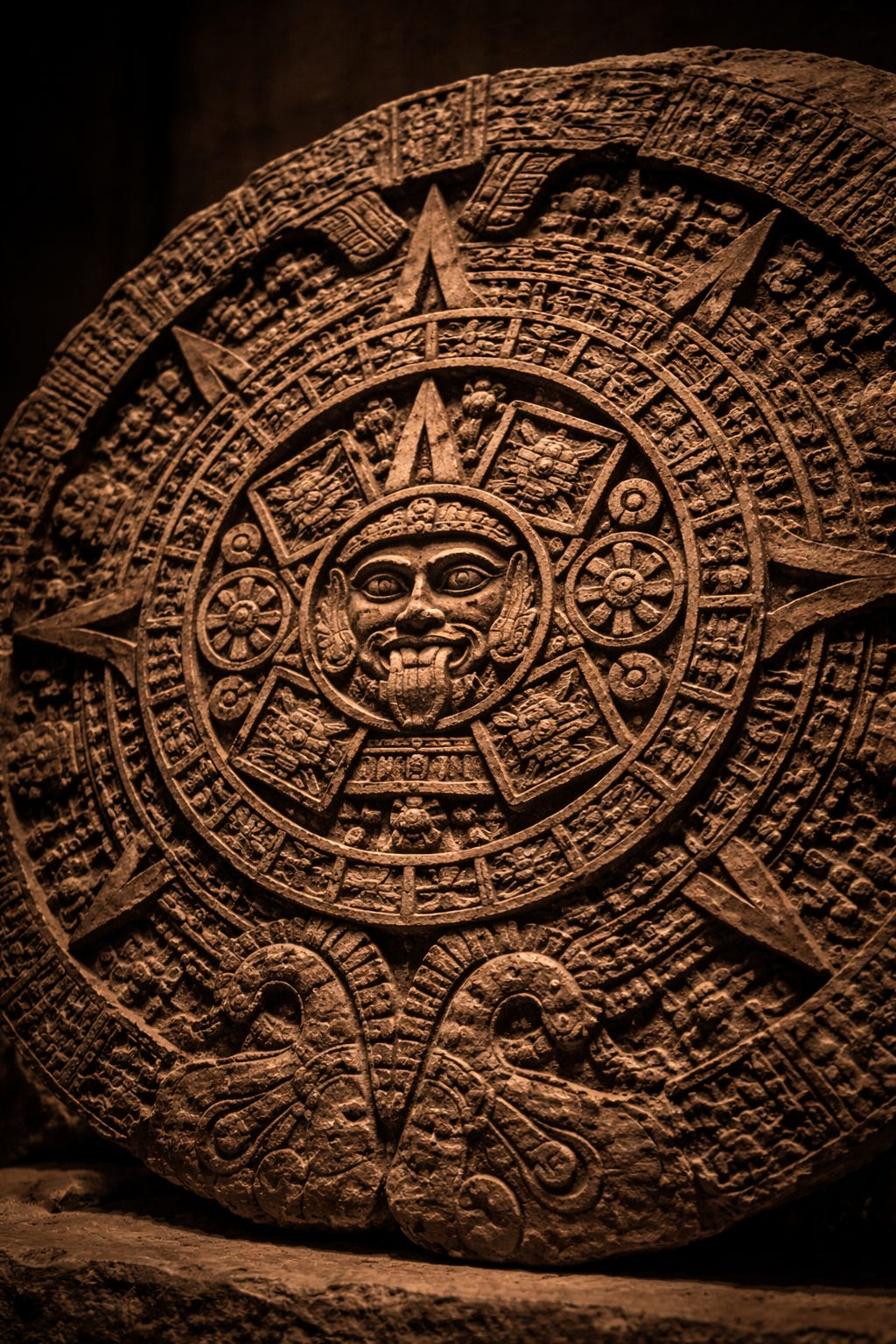
In South America, entire cities appear with ceremonial centers, pyramidal structures, and planned layouts, yet show no signs of warfare, no defensive architecture, and no gradual buildup. These were not survival-driven settlements. They were designed environments.
Civilization does not behave like an invention here.
It behaves like an installation.
This is the core of the problem.
If civilization were a purely human development, we would expect to see hesitation, mistakes, and inefficiencies. We would expect failed attempts, partial solutions, and abandoned designs.
Instead, we see something closer to deployment.
The traditional response has been to isolate each case. To treat them as unrelated miracles. To assume coincidence.
But coincidence does not survive scale.
When independent cultures, separated by oceans and millennia, display the same structural behavior at the same phase of development, coincidence stops being an explanation.
At that point, the question changes.
Not how did they do this?
But why does the evidence look the way it does?

THE WITNESSES
At this stage, archaeology alone cannot carry the case. We need testimony.
Not belief. Not mythology in the religious sense.
Memory.
Every early civilization left behind a record of how it understood its own beginning. These records are usually dismissed because they do not fit modern expectations. But when stripped of later theological embellishment, something unexpected emerges.
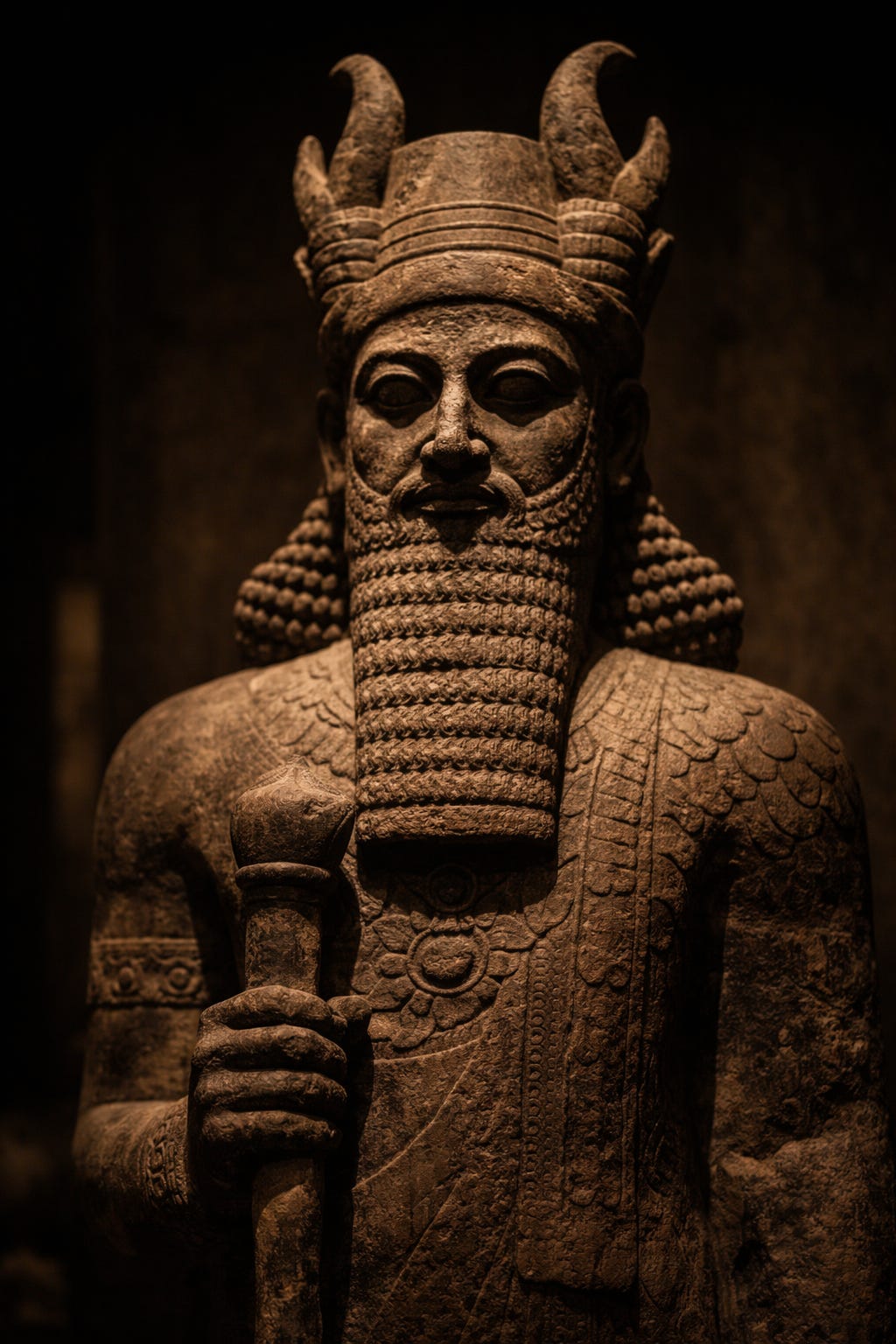
The earliest accounts do not describe gods as we imagine them today. They describe figures who arrive, organize, instruct, and withdraw.
They are not rulers.
They are not saviors.
They are not moral judges.
They are implementers.
Across cultures with no contact, the same functional role appears.
Creation is not emotional. It is technical.
Order is established, not fought over.
Knowledge is transferred, not discovered.
And once the system runs, the instructors leave.
This behavior is deeply abnormal for mythology.
Myths usually grow in drama over time. These accounts become less dramatic the further back we go. The oldest versions are almost dry. Procedural. Unconcerned with worship.
That should unsettle us.
In one region, the creator figure is described as bringing the world into form through thought and speech, as if reality itself were assembled through design. In another, the highest authority is distant, elevated, and curiously uninvolved, granting legitimacy but not participating in daily affairs. Elsewhere, a creator arrives, establishes civilization, teaches laws and crafts, then walks away, disappearing beyond the horizon.
These figures do not demand temples.
They do not require sacrifice.
They do not establish bloodlines.
They leave systems behind.
Later generations struggle to interpret this. Over time, the instructors are turned into gods, then into personalities, then into moral symbols. The original function is buried under narrative.
But the skeleton of the story remains.
Arrival.
Instruction.
Withdrawal.
This is not how belief systems form.
This is how historical memory degrades.
The argument here is not that these figures were literally gods, nor that their descriptions are scientifically precise. The argument is simpler and more dangerous.
Independent cultures remembered the same type of beginning.
That memory is structurally consistent with what the archaeology shows: sudden competence, fully formed systems, and no visible developmental trail.
Testimony and material evidence are telling the same story.
And neither one fits the accepted model.
The Point of Failure
At this point, the case narrows.
Once we accept that civilization appears without clear ancestry and that early cultures remembered their beginnings as externally instructed, the number of possible explanations collapses.
There are only three.
The first is that an advanced human civilization existed deep in prehistory, reached a high level of organization, and collapsed so completely that only fragments of its knowledge survived, transmitted to later societies as instruction myths.
The second is that early humans were influenced or guided by a non-human intelligence, external to Earth, capable of transferring complex organizational knowledge without remaining embedded in the resulting cultures.
The third is that humanity itself is not entirely indigenous to this planet, and that civilization represents not an invention, but a reactivation of prior knowledge carried across a much longer timeline.
Each explanation carries consequences. None is comfortable. All were previously dismissed, not because they were disproven, but because they violated an assumption.
The crucial point is this:
The evidence does not allow us to discard any of them.
