
The Pyramids and the Sphinx, Technology Beyond Time
While mainstream history tells us they were built around 2500 BCE by a well-organized workforce of ancient Egyptians, growing evidence suggests something far more extraordinary.

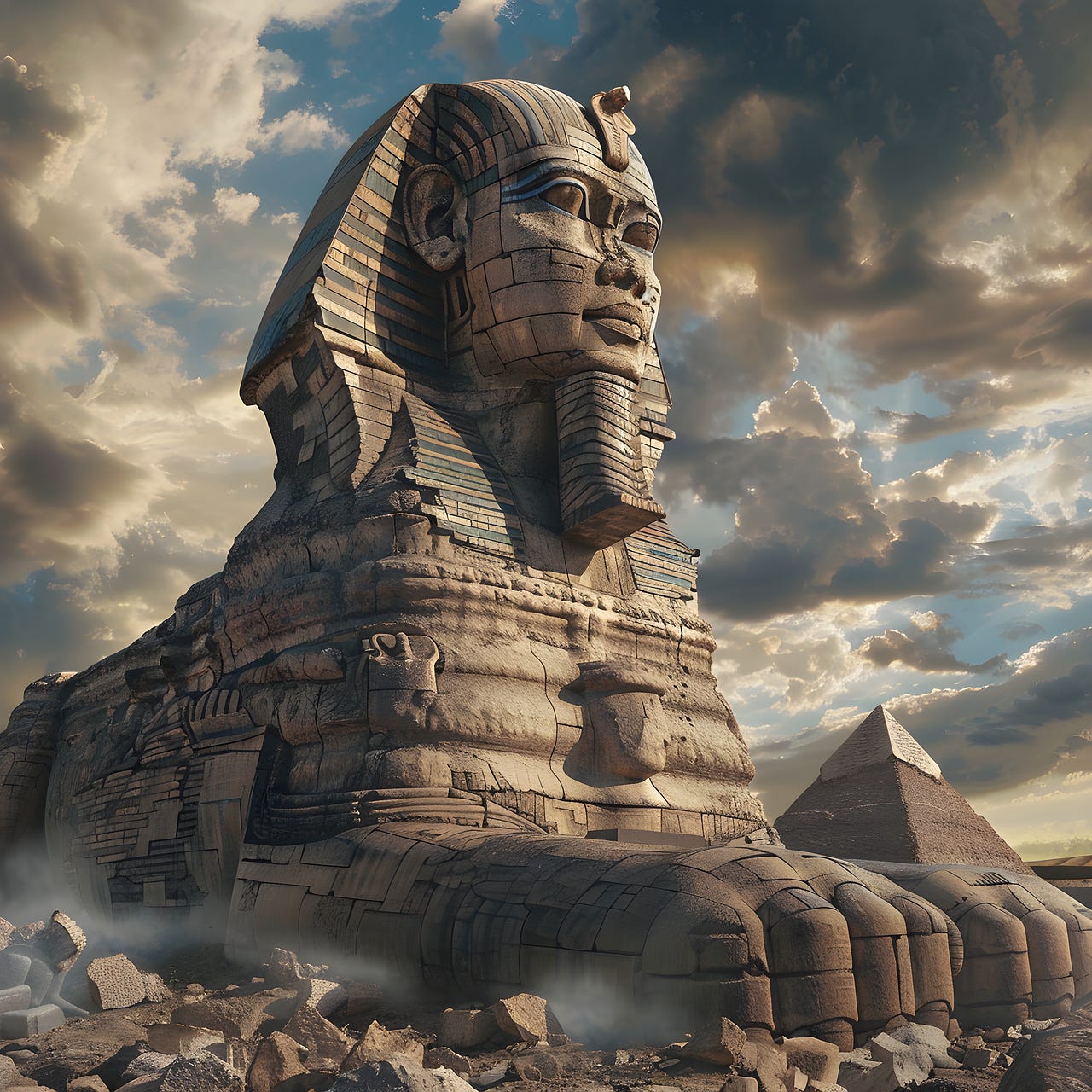
They rise from the sands like timeless sentinels, etched into the skyline of human consciousness: the Great Pyramids of Giza and the stoic, enigmatic Sphinx. These monuments are not merely the pride of Egypt, they are riddles in stone that have perplexed archaeologists, engineers, and mystics for centuries.
While mainstream history tells us they were built around 2500 BCE by a well-organized workforce of ancient Egyptians, growing evidence suggests something far more extraordinary. What if these iconic structures are remnants of a forgotten civilization? One far older than Egypt itself, and perhaps influenced by the same sky beings that inspired the myths of Sumer and the Egyptian pantheon?
A Monument Without a Name
The Great Pyramid of Giza, attributed to Pharaoh Khufu, bears almost no markings inside. Unlike the richly decorated tombs in the Valley of the Kings, it contains no inscriptions proclaiming ownership, no records of construction, and no bodies. This absence of evidence leads many to wonder: was it ever a tomb at all?
