
Volume 8: The Gnostic Rebellion
“When Ancient Seekers Challenged the False Gods and Fought for Humanity’s Divine Spark”

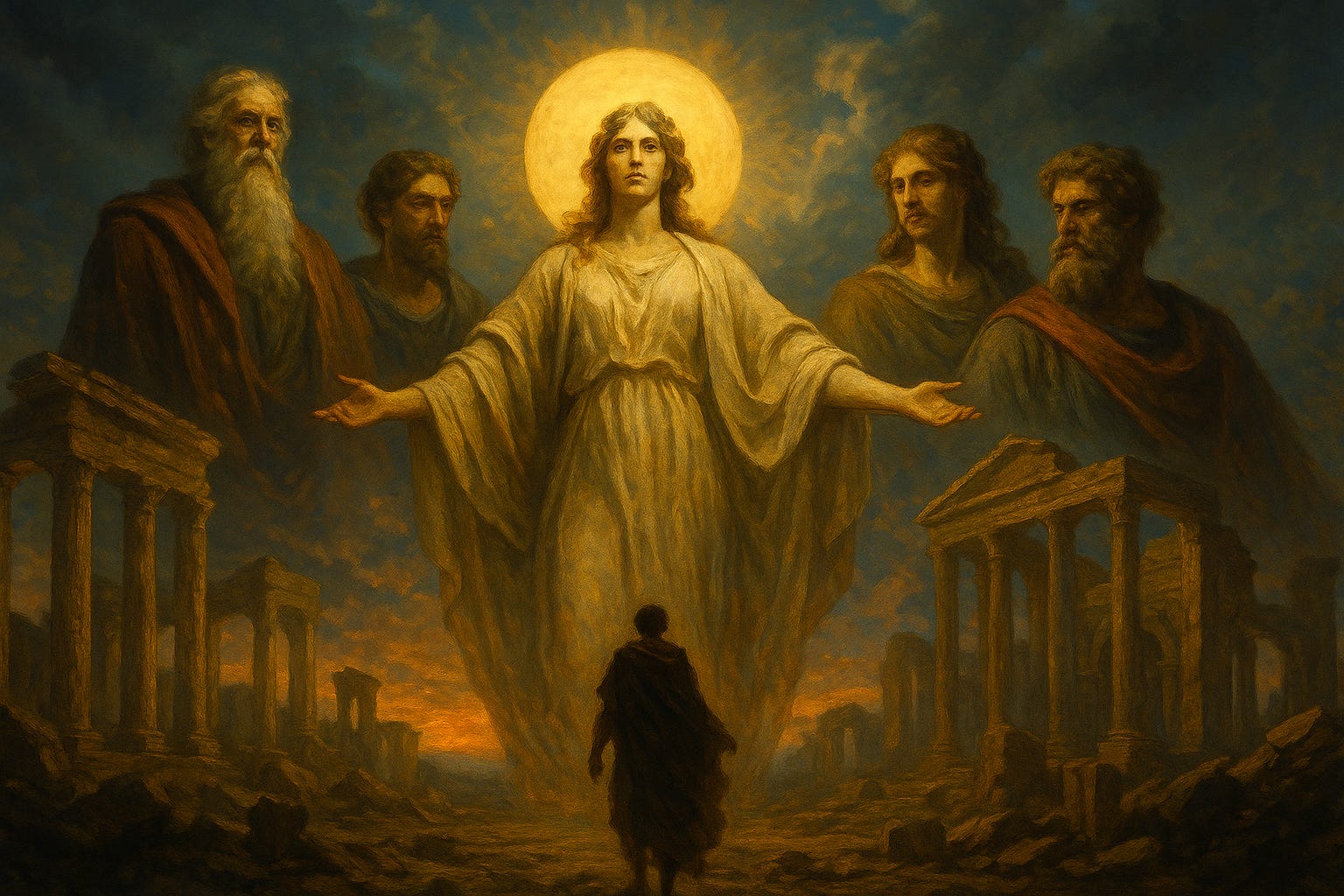
Introduction: Memories from the Forgotten Sky
Every culture has its myths, yet some myths refuse to fade into the background of fairy tales. They linger with a peculiar weight, as if they were not merely stories but veiled accounts of events that once shook the Earth. From broken Sumerian tablets to the Book of Enoch, from Plato’s dialogues on Atlantis to the oral traditions of the Americas, fragments align into a mosaic that suggests something extraordinary.
By the time we reach the eighth part of this unfolding chronicle, we are no longer examining isolated myths. We are confronting a pattern. The ancients did not simply imagine gods; they remembered encounters. These encounters reveal forces that shaped humanity, not only spiritually but biologically and culturally. They were celestial architects, builders of civilization, and perhaps even of society itself.
The story of humanity is not linear. It is cyclical, punctuated by interventions, floods, and forgotten ages. This is the lens through which we must now re-examine the past.
Part I The Watchers Descend
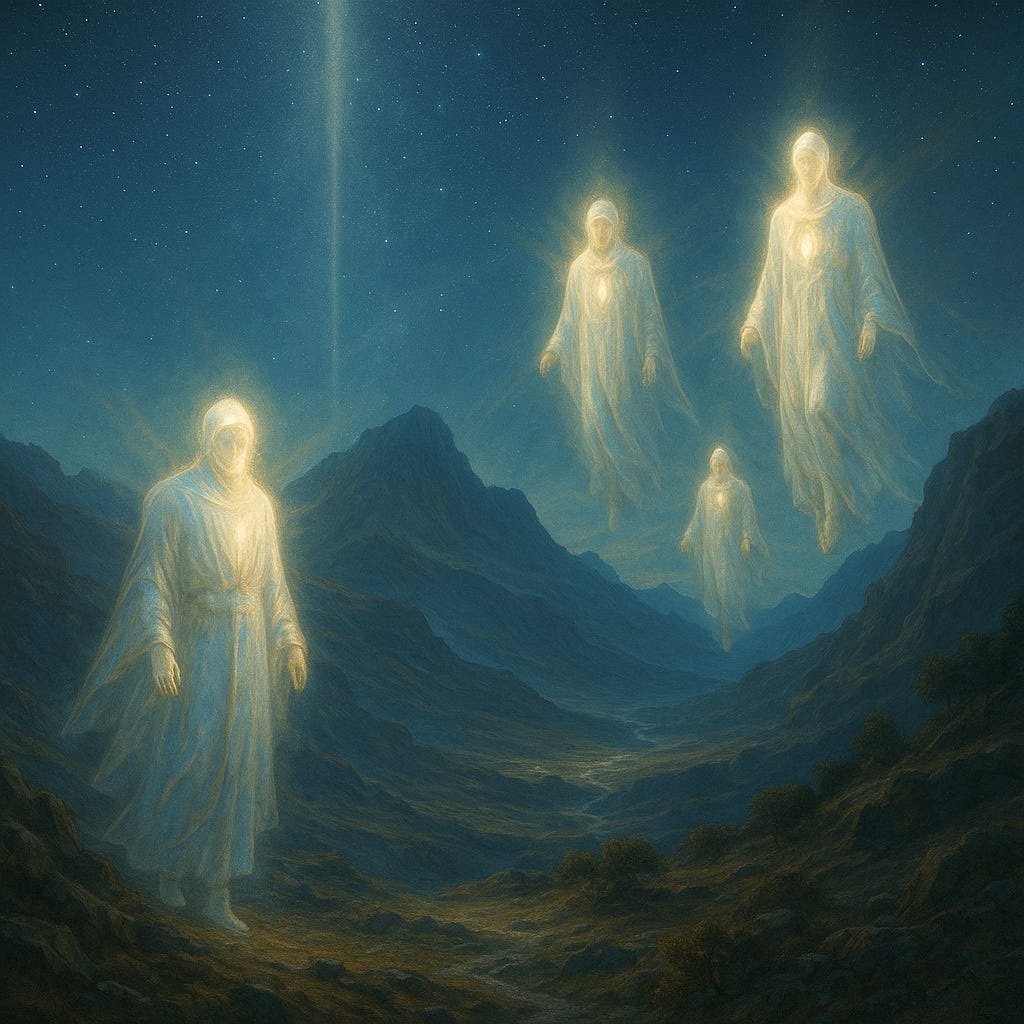
Long before Genesis, long before the great empires of the Nile and Mesopotamia, there were tales of Watchers. In the Book of Enoch, they are described as angels who “descended in the days of Jared upon Mount Hermon,” taking wives and teaching humankind forbidden knowledge.
But the Sumerians had their own version: the Anunnaki, “those who from heaven to earth came.” They, too, were described as powerful beings who brought skills that forever changed the destiny of humanity. Metallurgy, astronomy, agriculture, even the secrets of enchantment, these were the gifts attributed to them.
Archaeology alone cannot explain why complex agricultural societies appeared almost overnight around 10,000 BCE. Nor why monumental structures, Göbekli Tepe, with its precise astronomical alignments, arose at the dawn of civilization. To the ancients, the answer was clear: knowledge was given, not discovered.
The Watchers were both revered and feared. Their teachings advanced humanity, but they also broke a divine law. Knowledge given too soon is dangerous. What should have been centuries of slow evolution was compressed into a few generations, and the world was never the same.
Part II The Rivalry of the Gods: Enki and Enlil
In the epic traditions of Sumer, two divine brothers personified the cosmic conflict over humanity’s fate: Enki and Enlil.
Enlil: stern, authoritarian, ruler of the heavens and Earth. He imposed strict order and demanded absolute obedience. To him, humanity was a workforce, useful but expendable.
Enki: compassionate and cunning, the trickster-god who broke ranks with his kin. He saw potential in humankind and secretly aided them, teaching arts and sciences, warning them of coming catastrophes.
This duality is one of the oldest archetypes in history. In later traditions, Enlil’s character appears in wrathful storm-gods, Yahweh commanding obedience, Zeus hurling thunderbolts. Enki’s role lingers in serpent-figures, Prometheus bringing fire, or culture heroes who challenge the decree of heaven to uplift humanity.
The biblical Eden itself can be re-read through this lens. The serpent offering knowledge mirrors Enki’s defiance. Yahweh’s command to obey and not eat echoes Enlil’s demand for submission. Humanity was caught between two powers: one seeking to contain, the other to liberate.
This rivalry did not remain in heaven. It spilled onto Earth, influencing kingships, priesthoods, and the very foundations of law and morality. Behind every shift in ancient power lay the shadow of these two paradigms, control versus freedom, obedience versus knowledge.
